
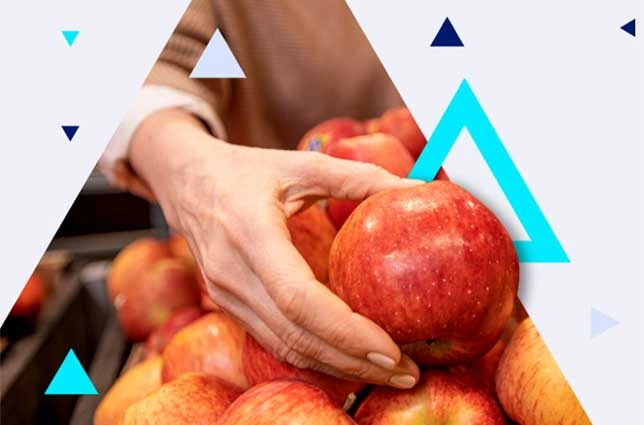
The food on your shelves is getting less nutritious and no one is measuring it.
Nutrient density in fresh produce has fallen sharply since the 1950s, yet consumers have no way to see it at the point of purchase. The food system is optimised for yield, shelf life and cosmetic appearance, nutrient density is unpriced, so it goes unmanaged. The science to fix this exists. What has been missing is a trust layer for the data.
BRIXit pairs a physical measurement kit with a progressive web app, allowing any consumer to measure the nutrient quality of their food and contribute a verified reading to a global public map in under a minute. Readings are auto-graded against the Reams Food Quality chart and displayed on an interactive globe, filterable by radius, timeframe, variety, production method and place of purchase giving users a living picture of nutrient density across the food system.
Built as the first application on the Mycelia identity layer, BRIXit runs on BSV chosen for its stable protocol, unbounded scalability and low cost per record, making it practical to handle high volumes of timestamped agricultural data at scale. Immutable on-chain records provide verifiable attribution so producers retain permanent ownership of their data, while an off-chain/on-chain architecture keeps large files lightweight without sacrificing integrity. BRC-100 compliance enables a single portable identity that works across every connected application, and onboarding is designed for ordinary consumers wallet sign-in and data submission abstracted into a simple, accessible flow, with no cryptocurrency knowledge required.
BRIXit is built on the BRC-100 wallet standard. The Mycelia Wallet serves as the default sign-in. Because BRC-100 is open, any BRC-100 compliant wallet can access BRIXit. One identity, portable across the full regen-ag toolkit, with no password stored on a server to be hacked, leaked or sold.
Every submission is signed by the user to prove origin and countersigned by BRIXit to confirm it was logged through the official platform. Both signatures are verifiable by anyone. The proof lives in the data itself.
Edits and deletions are recorded on-chain as spends. Every action creation, amendment and retraction is publicly traceable. Fraudulent users can be removed, but the record of their contribution history remains attributable.
BRIXit operates its own overlay service, meaning anyone can index, query or build on the dataset. The commons are genuinely open, not locked behind a platform.
At BSV transaction volumes and costs tens of thousands of weekly readings remain economically viable. Micropayment rewards per contribution and Bionutrient Food Association membership tiers are both operable on the same wallet infrastructure.
BRIX scores are public. Identity remains private unless the user chooses otherwise. Soil and water encryption under wallet keys is on the roadmap.
BRIXit pairs a physical measurement kit with a progressive web app, allowing any consumer to measure the nutrient quality of their food and contribute a verified reading to a global public map in under a minute. Readings are auto-graded against the Reams Food Quality chart and displayed on an interactive globe, filterable by radius, timeframe, variety, production method and place of purchase giving users a living picture of nutrient density across the food system.
Built as the first application on the Mycelia identity layer, BRIXit runs on BSV chosen for its stable protocol, unbounded scalability and low cost per record, making it practical to handle high volumes of timestamped agricultural data at scale. Immutable on-chain records provide verifiable attribution so producers retain permanent ownership of their data, while an off-chain/on-chain architecture keeps large files lightweight without sacrificing integrity. BRC-100 compliance enables a single portable identity that works across every connected application, and onboarding is designed for ordinary consumers wallet sign-in and data submission abstracted into a simple, accessible flow, with no cryptocurrency knowledge required.
BRIXit is built on the BRC-100 wallet standard. The Mycelia Wallet serves as the default sign-in. Because BRC-100 is open, any BRC-100 compliant wallet can access BRIXit. One identity, portable across the full regen-ag toolkit, with no password stored on a server to be hacked, leaked or sold.
Every submission is signed by the user to prove origin and countersigned by BRIXit to confirm it was logged through the official platform. Both signatures are verifiable by anyone. The proof lives in the data itself.
Edits and deletions are recorded on-chain as spends. Every action creation, amendment and retraction is publicly traceable. Fraudulent users can be removed, but the record of their contribution history remains attributable.
BRIXit operates its own overlay service, meaning anyone can index, query or build on the dataset. The commons are genuinely open, not locked behind a platform.
At BSV transaction volumes and costs tens of thousands of weekly readings remain economically viable. Micropayment rewards per contribution and Bionutrient Food Association membership tiers are both operable on the same wallet infrastructure.
BRIX scores are public. Identity remains private unless the user chooses otherwise. Soil and water encryption under wallet keys is on the roadmap.
BRIXit is live. The architecture works, the demand is real, and the network effect is already compounding.
Looking ahead, BRIXit will expand its dataset globally as more consumers, farmers and food communities contribute readings, with micropayment rewards per verified contribution introduced as the Mycelia economic layer matures. Soil and water data streams will be integrated alongside BRIX readings to build a more complete picture of food system health. In doing so, BRIXit aims to demonstrate the model for how citizen science platforms can be built on trusted, user-owned infrastructure rather than extractive data architectures.


Blockchain is a distributed digital ledger that securely records transactions across multiple computers. This ensures transparency and prevents fraud. Once verified, data cannot be altered, making it ideal for sectors like finance, healthcare, and manufacturing. The BSV blockchain further builds on this by offering fast, scalable transactions while enabling smart contracts, secure transfers and immutable records – all with a low environmental footprint.
A blockchain works by storing data in blocks that are linked in a chronological chain. Once data is recorded, it cannot be altered without agreement from the rest of the network, ensuring security and trust.
Blockchain is the underlying technology, while Web3 builds on top of the blockchain to create decentralised applications (dApps) and enable user-owned internet experiences.
Non-fungible tokens (NFTs) are unique digital assets that represent ownership or proof of authenticity of a specific item on the blockchain. This can include anything from artwork to music to collectables. Unlike crypto assets, NFTs are not interchangeable because each one is distinct and cannot be replaced with another.
Web3 is a term used to describe the next version of the Internet, known as the Metanet, powered by blockchain. The Metanet enables a more efficient, transparent and monetisable data ecosystem than the current Web2 Internet.
Blockchain offers benefits like enhanced security, transparency, efficiency, and the elimination of third parties. It can be used for everything from financial transactions to supply chain management and voting systems.
A smart contract is a self-executing program on a blockchain which automatically enforces agreements when predefined conditions are met without needing third parties.
Digital assets are anything of value that exists in digital form, such as crypto assets, tokens, or digital records, which are stored and managed on a blockchain. Blockchain provides a secure, transparent, and distributed platform for creating, transferring, and verifying the ownership and integrity of these digital assets.
Decentralised applications (dApps) are applications that run on a blockchain rather than a centralised database. They typically operate using smart contracts, offering greater transparency, security, and user control while removing the need for third parties.
The risks for most blockchains include scalability challenges, high energy consumption, and the potential for hacking or exploitation in poorly designed smart contracts. However, the BSV blockchain is capable of massively scaling to handle millions of transactions per second, which means the CO2 produced per transaction is significantly lower than other competing blockchains.
Sign up to hear about news, events, and much more connected with BSV blockchain.

BSV Association is a Switzerland based non-profit organisation that serves as the global advocate for BSV blockchain. Its mission is to advance adoption and unlock the full potential of BSV as a scalable, secure, energy-efficient public blockchain built for data integrity, enterprise solutions, and government applications. The Association supports developers, enterprises, and public sector institutions by fostering innovation, encouraging regulatory compliance, and promoting real-world use cases that demonstrate blockchain’s value on a global scale. Through education, developer engagement, strategic partnerships, public policy initiatives, and technological advancement, BSV Association is committed to driving sustainable growth and long-term utility of blockchain technology.
© 2026 BSV Association org. All rights reserved